

Carrier-grade infrastructure, engineered for Ghanaian conditions.
A hybrid network integrating fiber, LTE/5G, Wi-Fi, satellite, and solar — built to deliver continuous, productive connectivity from teaching hospitals in Accra to CHPS compounds in the Upper East.
No single technology serves every region affordably.
Ghana spans dense urban cores, sprawling peri-urban belts, and remote rural districts — each with different terrain, power realities, and demand profiles. A pure-fiber network is uneconomic outside major cities. A pure-mobile network can’t deliver institutional-grade reliability. A satellite-only network is too expensive at scale. The only architecture that delivers carrier-grade service nationally is a hybrid one — and engineering that hybrid is the core competence Celltell is built around.
A three-tier network: Core, Aggregation, Edge.
Five integrated transport and access technologies.
Fiber
High-capacity backhaul connecting core data centers to regional and high-density urban zones.
LTE / 5G
Wide-area wireless access for households, institutions, and mobility, with 5G readiness in priority zones.
Wi-Fi
Public, institutional, and community Wi-Fi zones for high-density usage in markets, schools, and campuses.
Satellite
Backhaul for hard-to-reach locations and continuity-of-service redundancy for critical institutional sites.
Solar Power
Energy-independent network nodes ensuring uptime where grid power is unreliable or absent.
Built on global carrier-grade platforms.
Celltell's network is engineered around proven, vendor-supported carrier infrastructure deployed in major operator networks worldwide. This ensures interoperability, longevity, and a clear upgrade path.
- Cisco ASR 9000 Seriesservice edge & peering
- Cisco NCS 5500 Seriesprovider routing
- Cisco NCS 5500 / NCS 55A2-MODregional aggregation
- Cisco NCS 540 Seriespre-aggregation
- Cisco ASR 920 Seriesaccess aggregation
- Cisco NCS 540small-site access
- Cisco Nexus 9000ACI fabric
- Cisco HyperFlexhyperconverged compute
- Cisco Firepower 9300security perimeter
- Crosswork Network Controllerprovisioning, optimization, fault management
Equipment partnerships are subject to ongoing vendor relationships and project-specific design choices.
National reach, phased by demand and readiness.
Deployment sequences urban anchor zones, regional capitals, and rural CHPS-and-school clusters — designed around institutional anchor demand and grid realities, not coverage maps drawn for marketing.
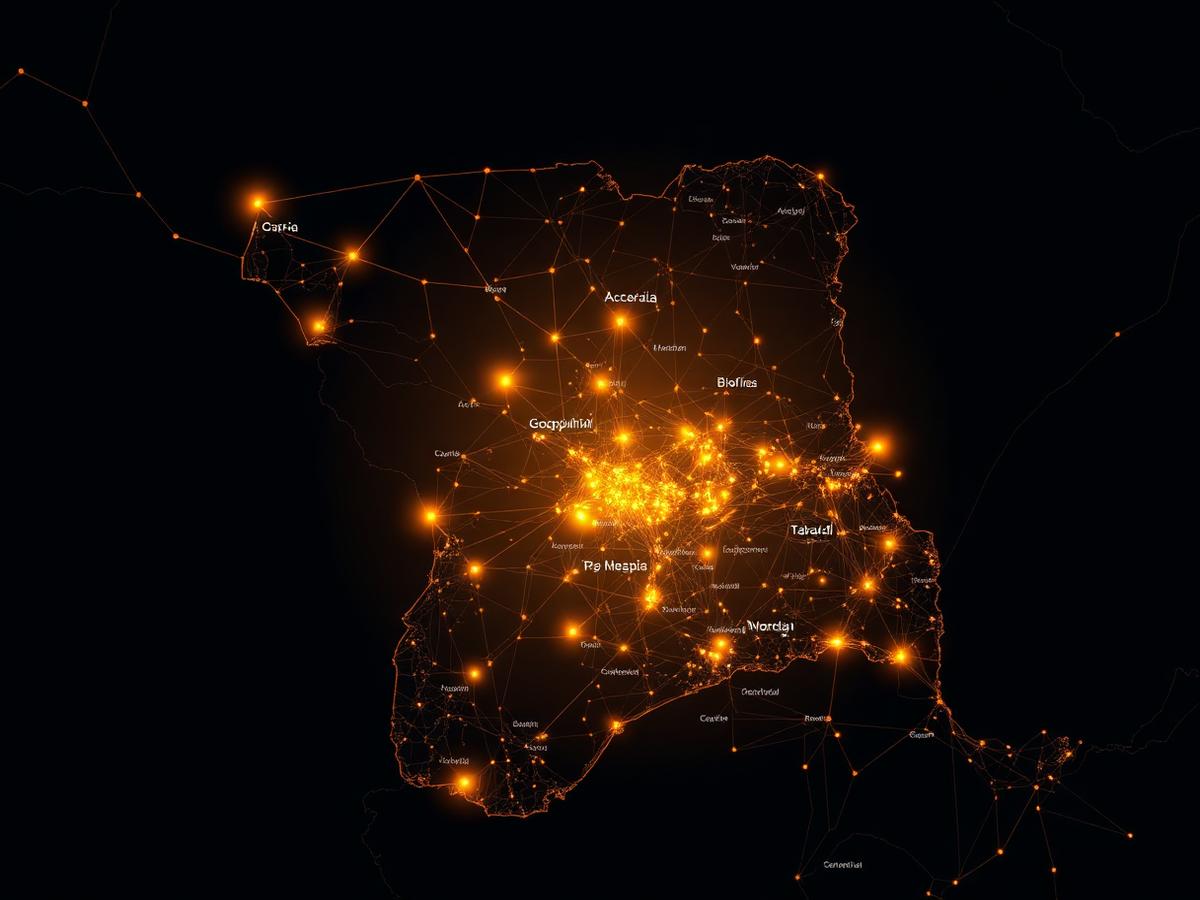
Indicative national footprint. Final node placement is subject to RF planning, anchor contracts, and right-of-way agreements.
- Phase 1
Greater Accra anchor zones
Core data centers commissioned, fiber backbone activated through Accra, Tema, and the industrial corridor. Anchor government and institutional sites brought online.
- Phase 2
Regional capitals
Aggregation facilities deployed in Kumasi, Takoradi, Tamale, and Cape Coast. Regional teaching hospitals, universities, and MMDAs connected.
- Phase 3
District and rural last-mile
Edge mesh extended via solar-powered nodes and satellite backhaul to CHPS compounds, district schools, and agricultural extension hubs.
- Phase 4
Densification and 5G
Wi-Fi zones and 5G small cells densified in commercial, transport, and tourism corridors. Continuous capacity uplift across the access tier.
Carrier-grade SLAs
Engineered uptime targets across core and anchor-institution links.
Energy-resilient
Solar-hybrid power on edge sites, designed for unreliable grid conditions.
Anchor-led siting
Sequenced around institutional demand — schools, clinics, MMDAs, markets.
Reviewing the network for due diligence or partnership?
Detailed architecture documentation, equipment bills of materials, and deployment plans are available under NDA to qualified investors and counterparties.